
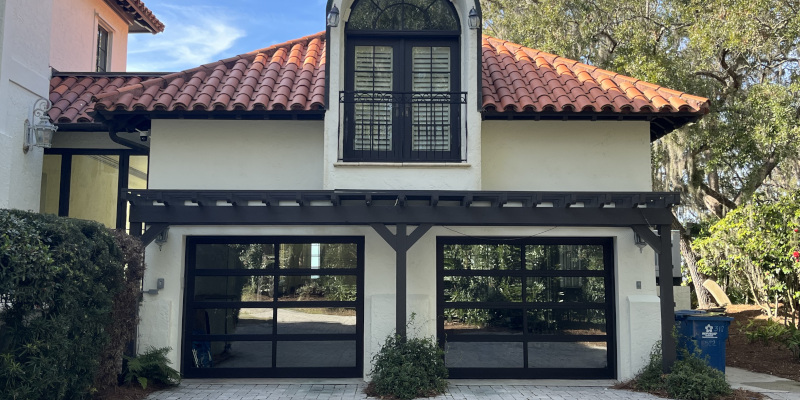
You press the wall button before work, the opener hums, and one side of the garage door climbs while the other hangs low. The bottom section is crooked in the opening, a cable looks loose, and your car is trapped inside. This is not the moment to pull harder on the door or keep testing the remote.
Overhead Door Company of the Lowcountry helps homeowners in Hilton Head and surrounding communities evaluate problems and choose between repair and replacement. The decision depends on damage location, the full system’s condition, parts availability, and whether repair can restore safe, dependable operation.
Start with Safety, Not Price
A garage door is a large moving system whose springs counterbalance substantial weight. The Door & Access Systems Manufacturers Association safety guide warns that proper installation, operation, maintenance, and testing are necessary, and that an improperly adjusted door or opener can exert deadly force while closing.
Can you inspect or repair a broken spring, loose cable, drum, or other tensioned hardware yourself? No. Stop using the door.
Keep people and pets away, do not stand beneath it, and arrange professional garage door service.
Stop operating the door if it is crooked, has come off its track, drops unexpectedly, feels unusually heavy, or has a visible gap in a spring. Repeated opener cycles can worsen damage because the opener is not designed to replace the spring system’s lifting work.
A cosmetic dent is different. If the door remains level, moves normally, and has no damaged hinges, track, cables, springs, or section joints, it may be reasonable to leave the door closed until it can be assessed.
How to Read the Repair-or-Replace Signals
Use the following decision sections as a starting point, not as a substitute for an in-person diagnosis. No single symptom settles the question because the same visible problem can have different causes and consequences.
One Worn Component or Widespread Wear
Repair is often worth considering when one replaceable component is worn, the rest of the door is sound, and compatible parts are available. Consider replacement when several major components are worn, damaged, or obsolete.
One Damaged Section or Multiple Damaged Sections
A limited section repair may work when a compatible section is available and the others are straight and healthy. Replacement is stronger when damage spans sections, distorts joints, or affects travel.
Surface Rust or Structural Corrosion
Surface staining, faded finish, or superficial corrosion may allow cleaning, finish care, or focused repair when edges, fasteners, and hardware remain sound. Rust that perforates steel, spreads around joints, or accompanies structural damage favors replacement.
Noise or Rough Movement
Noisy or rough travel may come from repairable roller, hinge, alignment, balance, or maintenance issues. Noise paired with cracked sections, distorted tracks, recurring failures, or widespread wear points toward replacement.
Opener Trouble or Door-System Failure
Opener repair may solve the problem when the door is balanced and moves correctly during professional testing. If the door is failing, opener-only work leaves the primary problem unresolved.
Appearance Goals or Functional Changes
Cleaning, finish care, or section repair may be enough for a limited appearance concern. Replacement fits goals such as a different design, windows, material, insulation package, or complete exterior update.
Storm or Impact Damage
A safe, compatible repair may suit isolated damage when the tracks, opening, and remaining sections are sound. Replacement becomes more compelling when damage affects several sections, the tracks, or the opening, or a piecemeal repair would be unreliable.
Repeat Service Calls and Declining Reliability
Repair may be reasonable when earlier failures were unrelated and minor. When costs accumulate as reliability declines, compare the next repair with the condition of everything that will remain.
When Garage Door Repair Makes Sense
Repair is usually the honest first choice when a specific, replaceable part caused the problem and the rest of the system remains in good condition. Examples can include worn rollers, a damaged hinge, photo-eye alignment issues, weather seal deterioration, or an opener component problem.
A repair may also make sense when one door section has limited damage and a matching replacement section is available. Matching involves more than color. The section’s design, dimensions, construction, and connection points must work with the existing door.
Professional inspection matters because the symptom may not identify the cause. A door that shudders could have a track issue, damaged roller, hinge problem, balance problem, or a combination. Replacing the loudest-looking part without checking the full travel path can leave the real fault in place.
Age alone is not a reason to discard a working door. If the sections are straight, hardware is serviceable, the system can be safely balanced, and repair parts are available, a focused repair may deliver the function you need without paying for a complete replacement.
For smaller problems or uncertain symptoms, begin with garage door maintenance and repair in Hilton Head. Ask for the cause, the scope of the proposed repair, and the condition of the rest of the system.
When Replacement Becomes the Better Decision
Replacement deserves serious consideration when the damage is structural or spread across the system. Bent or cracked sections can affect the way rollers enter the track and the way the door seals in the opening. Multiple compromised sections can make a section-by-section strategy poor value even if an isolated repair is technically possible.
Recurring breakdowns are another signal. One repair is not automatically a pattern, but repeated work on aging sections, hardware, and the opener can turn into a series of bills without restoring confidence. Compare the proposed repair with the remaining known wear, not with the price of a new door in isolation.
Parts availability matters, too. A discontinued section profile, incompatible hardware, or finish that cannot be reasonably matched may change the practical answer. A technician should explain whether replacement parts are available and whether mixing old and new components creates limitations.
Replacement can also be a planned home improvement rather than a reaction to failure. You may want a different panel design, more natural light, an insulated construction, quieter operation, or a finish that fits an exterior renovation. Review residential garage door options based on the opening and your priorities rather than choosing from a photo alone.
Finally, consider the full assembly after vehicle impact or storm-related damage. The visible dent may be only one part of the problem. Tracks, jamb attachments, rollers, hinges, and the opening itself should be checked before anyone recommends a repair or replacement.
When You Should Not Replace the Door
Do not replace a serviceable door merely because the opener stopped responding. A battery, power, sensor, control, or opener fault does not prove the door needs replacement because the door and opener are separate products.
Do not replace solely because an older door is said to be “due.” Condition, safe operation, parts availability, repair scope, and your goals matter more than an unsupported age cutoff.
Consider postponing a style-driven replacement if another exterior project will change the opening, trim, driveway, or color plan. Coordinating measurements and design can prevent buying around details that will soon change.
Not every dent requires a full purchase. The key distinction is whether damage is only visual or changes alignment, joint movement, hardware attachment, or safe travel.
How Lowcountry Conditions Affect the Evaluation
Hilton Head homes face heat, humidity, wind-driven rain, airborne debris, and, in coastal locations, salt exposure. Those conditions make finish condition, corrosion, bottom seals, and water entry worth checking, but they do not automatically mean replacement.
Look closely at lower section edges, hinges, fasteners, track supports, and areas where coating has been scratched. Surface staining and structural corrosion are not the same. A professional should determine whether cleaning and finish care are appropriate or whether material loss has weakened an attachment point.
After severe weather, inspect from a safe distance before operating the door. Do not assume a door is undamaged because the exterior face looks intact. If the door binds, sits unevenly, or makes a new scraping or popping sound, leave it closed and schedule an assessment.
This article does not claim that any door is approved for a particular wind-load or building-code requirement. Product selection and permitting questions depend on the exact address, opening, product documentation, installation details, and requirements that apply to the project. Ask for those details to be verified for your specific replacement.
Compare the Real Cost of Each Path
A repair estimate should identify the failed part, related work, and any known limitations. A replacement estimate should clarify the door configuration, materials, windows or decorative options, track and hardware scope, opener work if any, removal, and other project-specific items.
For broad planning only, HomeAdvisor’s national cost guide, updated June 17, 2026, reports a normal garage door replacement range of $754 to $1,707, with an average of $1,230. It also shows much wider ranges by door size, material, design, opener needs, customization, location, and site conditions.
Those figures are general market information, not a quote or promised price from Overhead Door Company of the Lowcountry. A Hilton Head project may fall outside them. Exact pricing requires measurements, product choices, an assessment of the existing opening and hardware, and a clear installation scope.
Identify the Problem Each Option Solves
Ask what the proposed option corrects and whether the estimate connects the work to the diagnosed fault.
Account for the Wear That Will Remain
Ask what existing wear will remain and whether a repair restores a sound system or leaves known concerns.
Confirm Compatible Parts Are Available
Confirm that required sections and hardware are available and compatible with the existing door.
Match the Choice to Your Priorities
Decide whether the option meets your reliability, appearance, and budget priorities.
The lowest immediate price can be sensible when the issue is isolated. Replacement may offer better value when a repair leaves multiple worn or damaged elements likely to require more work.
What a Professional Evaluation Should Cover
A useful evaluation considers the full system and your goals. The technician should observe travel, alignment, sections, rollers, hinges, tracks, cables, springs, seals, and the opener relationship without operating a dangerous door for a sales demonstration.
When replacement is under consideration, measurements should cover the opening, headroom, side room, and back room. Framing, track arrangement, and opener compatibility can affect the scope.
You should know whether the recommendation is driven by safety, reliability, appearance, or a combination. If both paths are reasonable, ask for the tradeoffs in plain language.
Overhead Door Company of the Lowcountry works with residential garage doors and garage service, including installation and repair contexts, and carries brands including Overhead Door, LiftMaster, Haas, Amarr, and Rytec. Brand availability does not mean every model fits every home, so selection should follow measurements and project requirements.
A Simple Decision Process for Hilton Head Homeowners
Stop using the door when there is a safety concern. Take photographs only from positions that do not require standing beneath it or touching hardware.
Record any impact, new sound, uneven movement, power interruption, water exposure, or recent service. This history can distinguish a single fault from a pattern.
Gather prior invoices because repeat repairs provide context beyond a visual inspection.
Define success before comparing options. State whether you want basic safe operation or also want windows, quieter movement, a different appearance, or improved comfort in an attached garage.
Schedule an assessment rather than forcing a decision from photos. Hilton Head homeowners can review the Hilton Head service area page or call (843) 489-3200 Monday through Friday, 8 AM to 4 PM. The office is closed on weekends.
Garage Door Repair or Replacement FAQs
How Much Does Garage Door Replacement Cost?
HomeAdvisor’s current national planning range is $754 to $1,707, with a reported average of $1,230. That is general market information, not a local quote. Door size, material, design, windows, insulation, opener work, site conditions, removal, and installation scope can move an actual price below or above a published range.
Is It Cheaper to Repair or Replace a Garage Door?
A focused repair usually costs less upfront than full replacement, but price alone does not settle the decision. Compare what the repair restores, what worn or damaged parts remain, parts availability, and the likelihood of additional service. An on-site estimate is the only responsible way to compare exact options for one door.
Can I Replace One Damaged Garage Door Section?
Sometimes. A section replacement depends on the location and extent of damage, the health of the other sections, and availability of a compatible section. If several sections are bent, cracked, corroded, or no longer available, complete replacement may be more practical.
Can I Repair a Garage Door Spring or Cable Myself?
No. Stop using the door.
Springs, cables, drums, and related hardware can be under dangerous tension, and a crooked or heavy door can move unexpectedly. Keep clear of the opening and arrange professional service.
Does a Broken Garage Door Opener Mean I Need a New Door?
No. The opener may have a power, control, sensor, drive, or other issue while the door itself remains serviceable. A technician should evaluate door balance and movement separately from opener operation before recommending either product be replaced.
Should I Replace a Garage Door Just Because It Is Old?
Not automatically. A safely operating, structurally sound door with available service parts may remain a repair candidate. Replacement becomes more compelling when age is accompanied by structural damage, widespread wear, obsolete parts, repeated failures, or goals the existing door cannot meet.
What Should I Do After Storm or Vehicle Damage?
Do not keep cycling the door to see whether it clears. If it is crooked, jammed, off track, or has damaged cables, springs, hinges, or sections, keep people away and schedule an evaluation. Photograph damage only from a safe position and preserve relevant insurance information.
Request a Clear, Door-Specific Recommendation
The best answer is not always replacement, and it is not always another repair. It is the option that restores safe, dependable operation while accounting for the condition of the whole system, available parts, your goals, and the true project scope.
Overhead Door Company of the Lowcountry is located at 2001 B E Wheatley Drive, Beaufort, SC 29902 and serves Hilton Head and other Lowcountry communities. To discuss your garage door during regular business hours, call (843) 489-3200 or use the contact page.