
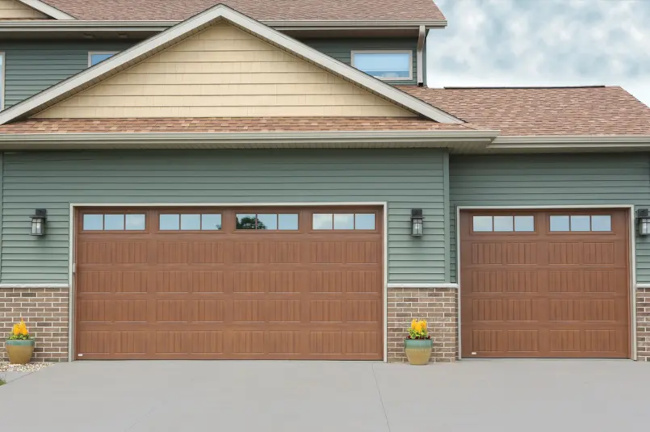
Choosing a garage door in a coastal environment like Hilton Head is a different decision than choosing one inland. Salt air, sustained humidity, intense UV exposure, and seasonal storms put specific demands on materials, finishes, and hardware that a standard door selection process doesn’t always account for. A door that performs well in a dry climate for twenty years may show corrosion, warping, or seal failure in a coastal setting in half that time. Getting the material and specification right from the start is the most effective way to protect that investment. This guide walks through the main garage door materials and the factors that determine how each performs in a humid, salt-air environment.
Why Humidity and Salt Air Change the Garage Door Decision
Most homeowners understand that humidity is hard on building materials, but salt air operates differently than ordinary moisture. Coastal air carries chloride particles that work into metal surfaces at a microscopic level, initiating corrosion from the inside out. A spring, cable, or hinge can be losing structural integrity well before any visible rust appears.
In our experience servicing doors across the Lowcountry, torsion springs are among the first components to show the effects of salt air exposure. The coil structure creates surface area where chloride particles settle and begin breaking down the metal, often concentrating at the coil ends where stress is highest during operation. By the time rust is visible, the spring has typically been losing cycle strength for some time.
UV exposure compounds the problem. The Lowcountry receives intense sunlight year-round, which accelerates paint fade, rubber deterioration, and material warping independently of humidity. Bottom seals are particularly vulnerable. In coastal environments, the rubber at the corners of the bottom seal tends to become brittle and pull away from the door frame before the center section shows obvious wear, creating gaps that allow moisture into the garage even when the door appears sealed from a distance.
Steel Garage Doors in Humid Climates
Steel is the most widely installed garage door material across residential and commercial properties, and it remains a strong option in coastal environments provided the finish and coating specifications are appropriate for salt air.
The key distinction is in the protective system applied to the steel. Hot-dip galvanized steel, where the metal is coated in zinc through immersion, provides significantly better corrosion resistance than standard painted or electro-galvanized finishes. The zinc layer acts as a sacrificial barrier, corroding in place of the underlying steel and extending the door’s service life in salt air. Higher-gauge steel, which refers to thicker metal despite the counterintuitive lower gauge number, holds up better to coastal conditions and provides better resistance to wind-driven impact during storm season.
Insulation construction matters beyond thermal value in humid climates. Steel doors with polyurethane foam cores have the foam injected directly between the two steel skins, bonding to both surfaces and creating a structurally unified panel. This eliminates the internal air gap present in polystyrene board insert construction, where a foam board sits between the skins without bonding to them. In high-humidity environments, that air gap can allow condensation to form inside the door panel over time. For coastal installations, polyurethane core construction is the stronger specification.
Regular inspection of seams, panel edges, and hardware attachment points is part of maintaining a steel door in a salt-air environment. Touch-up paint on exposed metal keeps the protective system intact and prevents the localized corrosion that starts at small chips or scratches.
Fiberglass and Composite Garage Doors
For homeowners in the Lowcountry who want the lowest-maintenance option, fiberglass and composite doors offer the strongest performance against salt air and sustained humidity.
Fiberglass does not corrode. There is no metal substrate to react with chloride particles, which means the primary mechanism that degrades steel doors in coastal environments simply doesn’t apply. Fiberglass also resists warping and moisture absorption, giving it a meaningful advantage over wood where humidity fluctuates between seasons.
Modern fiberglass doors are available with wood-grain textures that replicate the appearance of a traditional wood door closely enough that the difference is not obvious from the street. For homeowners who want a carriage-style aesthetic without the refinishing schedule solid wood demands in a humid climate, fiberglass composite is the more practical path.
The primary consideration with fiberglass in the Lowcountry is UV resistance. Lower-quality fiberglass can fade or become brittle with prolonged sun exposure. Confirming a UV-resistant finish at the time of selection extends the surface integrity of the door significantly.
Wood Garage Doors in Coastal Climates
Wood garage doors offer the highest design flexibility and a warmth of appearance that no other material fully replicates. In a coastal climate, however, wood is the highest-maintenance option, and that gap widens the closer the property is to open water.
Moisture causes wood to expand and contract with humidity changes. Over time, that movement creates stress at seams, panel edges, and joinery points. Paint and stain systems fail faster in high-humidity environments, and once the protective coating breaks down, moisture reaches the wood directly. Warping, cracking, and paint delamination at panel edges are the most common failure patterns on wood doors without an active maintenance schedule in the Lowcountry.
Wood composite addresses much of this through engineered materials that resist warping and moisture absorption while retaining the surface appearance of natural wood. For homeowners committed to a wood aesthetic on Hilton Head, wood composite is the more sustainable long-term choice. Solid wood is an option, but it carries a maintenance obligation that is non-negotiable in this climate.
Aluminum and Glass Doors in Humid Climates
Aluminum is naturally corrosion-resistant, which gives it an advantage over uncoated steel in coastal environments. The material does not rust, and standard aluminum extrusions hold up well in salt air without the finish degradation that steel can experience.
The primary consideration with aluminum in storm-prone coastal areas is structural strength. Aluminum is softer than steel and more susceptible to denting from wind-driven debris. During storm season on Hilton Head, this is a real-world factor rather than a theoretical one. Doors designed for coastal use with marine-grade aluminum extrusions and impact-resistant glass panels address this limitation, but they represent a specific product specification rather than a standard feature.
For contemporary architecture where the visual openness of a glass panel door is a design priority, aluminum and glass is a strong option with the right specifications. The seal integrity around each glass panel should be confirmed at installation and inspected periodically, as seal failure is the primary moisture vulnerability in this door type.
Insulation and Moisture Resistance
Insulation performance in a humid coastal climate goes beyond energy efficiency. The relationship between the interior and exterior temperature of the door affects how condensation forms and where moisture accumulates within the door assembly.
Polyurethane foam core construction, where the foam is injected and bonded directly to both door skins, creates a unified panel with no internal air space. In the Lowcountry, an air gap inside the door panel creates a surface where warm, humid exterior air meeting the cooler interior face of the panel can condense, particularly during summer months.
For attached garages, a well-insulated door reduces the transfer of exterior humidity into living spaces. In a climate where outdoor humidity regularly exceeds eighty percent during summer, that transfer is a meaningful consideration for homeowners managing interior comfort and air quality.
Weather Seals and Hardware in Coastal Environments
The door itself is only part of the climate equation. The seals, hardware, and surrounding components face the same conditions and require the same attention during selection and maintenance.
Bottom seals in coastal environments should be inspected annually. The rubber compound deteriorates faster under sustained UV exposure and salt air than general manufacturer guidance assumes, which is calibrated for average conditions. Side and top seals keep wind-driven rain out during storm season and should be checked for brittleness or gaps before storm season each year.
Hardware including hinges, rollers, and tracks should carry stainless steel or corrosion-resistant coatings for salt-air environments. Standard zinc-plated hardware corrodes faster in coastal conditions, and premature hardware failure on an otherwise sound door is an avoidable outcome when the original installation uses interior-grade components in a coastal setting.
Wind Load Ratings for Storm-Prone Areas
Hilton Head and the Lowcountry fall within a hurricane-prone coastal zone, which makes wind load rating a factor in door selection that is easy to overlook.
Wind load rating measures the door’s ability to withstand wind pressure without structural failure. It is a specific product designation, not a standard feature. Homeowners in coastal areas should confirm the wind load rating of any new door before installation, particularly for doors facing prevailing storm winds. Some communities and HOAs in the Lowcountry have specific requirements around wind-rated doors, and a provider familiar with local conditions is a more reliable source on the right specification than general product literature.
Choose the Right Door for the Lowcountry Climate
The best garage door for a humid climate is the one specified correctly for the environment it will actually operate in. Material, finish, insulation construction, seal quality, hardware, and wind load rating all contribute to how a door performs over its service life in a place like Hilton Head.
Overhead Door Company of the Lowcountry brings regional experience serving Hilton Head and the surrounding communities, backed by the Overhead Door brand and membership in the International Door Association and the American Association of Automatic Door Manufacturers. Reach out today for guidance on selecting the right door for your property and the local climate.